Most private jet trips within North America are flown in one of three classes: light, midsize or super-midsize. They are close enough in size to be confused and far enough apart in price to matter. Here is what changes at each step up, and how to tell which one your trip needs.
The three classes at a glance
| Light jet | Midsize | Super-midsize | |
|---|---|---|---|
| Typical seats | 6–8 | 7–9 | 8–10 |
| Typical range | 2,000–2,150 nm | ~2,100 nm | 3,200–4,000 nm |
| Cabin height | 4.8–4.9 ft | ~5.7 ft | 6.0 ft |
| Example models | Phenom 300E, Citation CJ4, Learjet 75 | Citation XLS+ | Challenger 350, Citation Longitude, Praetor 600 |
| Hourly estimate | $3,500–5,500 | $4,500–7,000 | $6,500–9,500 |
| Best for | Up to about 3 hours, small groups | 2–4 hours, more bags, taller cabin | 4 hours plus, coast to coast, stand-up cabin |
Light jets: quick and efficient
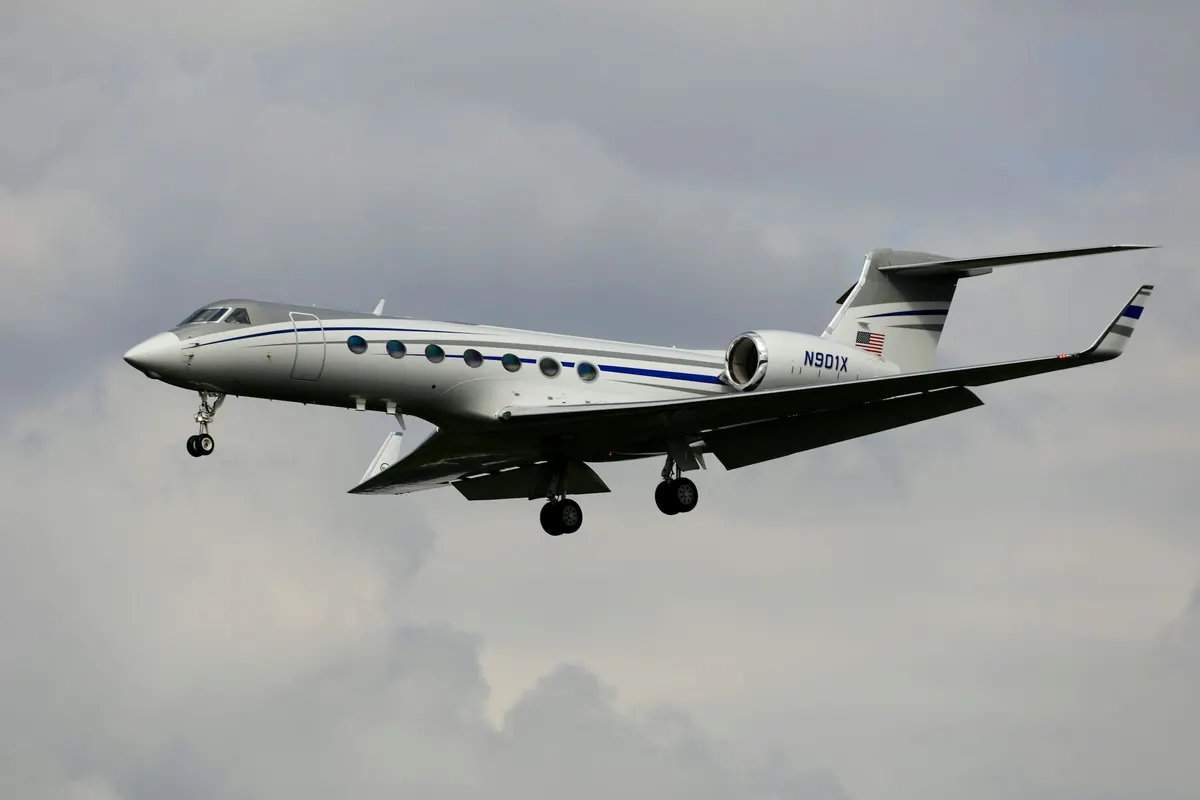
Light jets are the most chartered class in the United States for good reason. A Phenom 300E, Citation CJ4 or Learjet 75 cruises at around 450 knots, uses runways that larger jets cannot and costs less per hour than any larger jet.
They seat six to eight on paper. In practice, four to six passengers with luggage is the comfortable load, because baggage space fills quickly when every seat is taken. Cabin height is just under five feet, so you sit for the flight and stoop to move. Most have a small lavatory; on some it is closed off by a partition rather than a full door.
Typical light jet trips include Teterboro to Palm Beach in about 2½ hours, Dallas to Los Cabos in about the same, and Van Nuys to Las Vegas in under an hour.
Midsize: the cabin upgrade
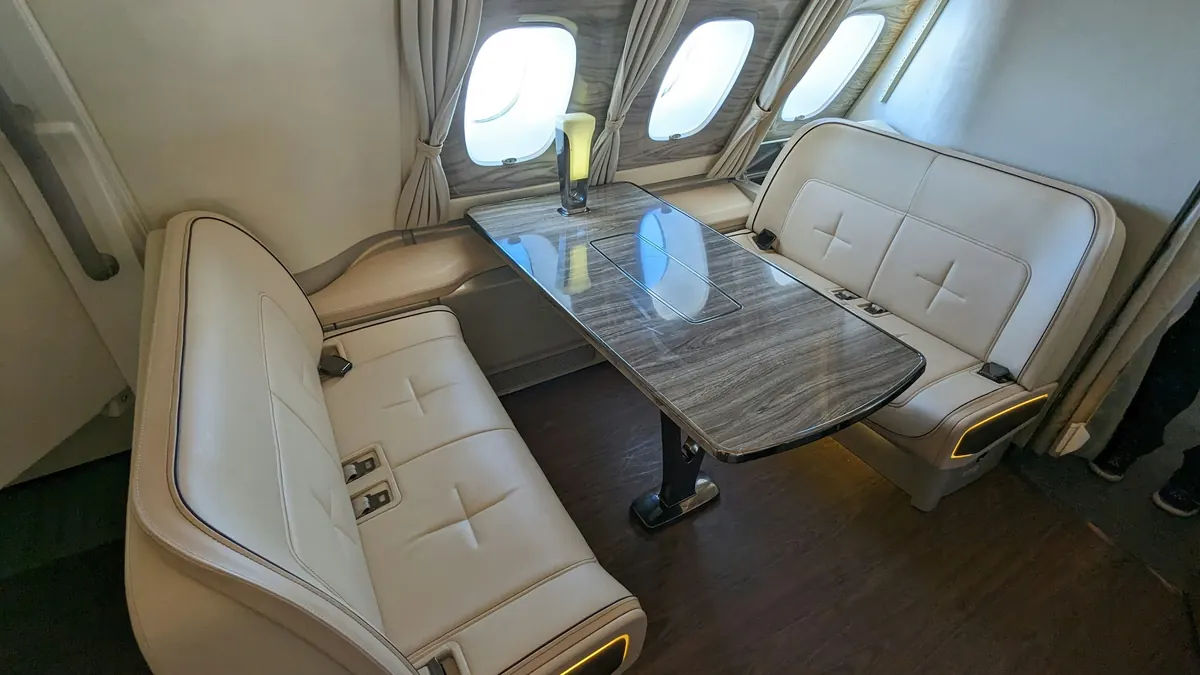
The midsize step is often misunderstood. A Citation XLS+ flies about as far as a light jet, around 2,100 nautical miles, at a slightly lower cruise speed. What you buy is the cabin: about 5.7 feet of headroom, enough for most people to walk with a slight stoop; an enclosed lavatory; and noticeably more space for bags, with room for golf clubs or skis on many trips.
That makes the midsize the right choice when a trip is long enough for comfort to matter but not so long that range does: two to four hours, a group of six to eight, or a family with luggage for a week. Boston to Palm Beach in a midsize is a different experience from the same flight in a light jet, for roughly $1,000–1,500 more per hour.
Super-midsize: range and a stand-up cabin
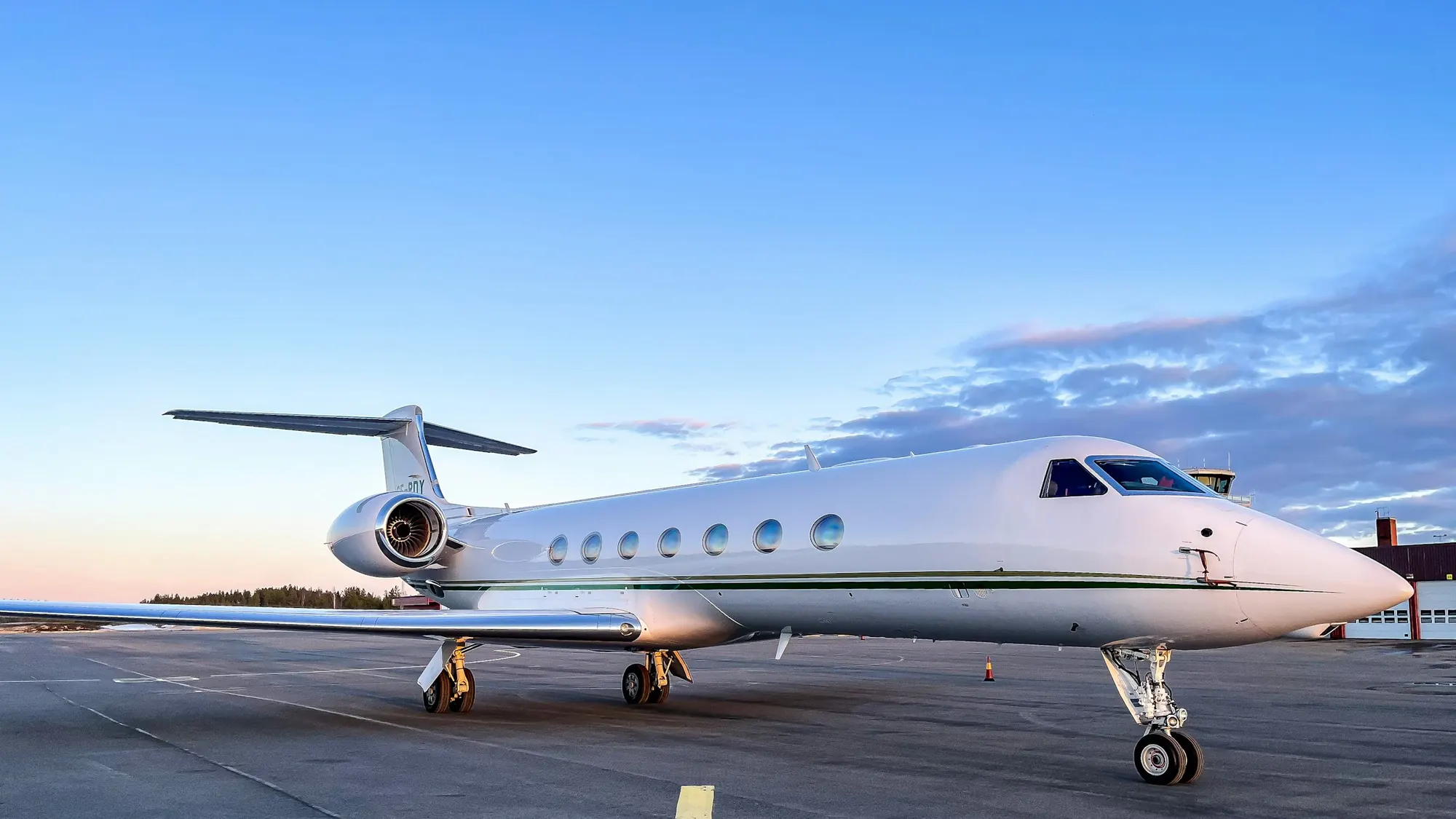
The super-midsize step changes two things at once. Range rises to 3,200–4,000 nautical miles, enough to cross the United States nonstop in most conditions, and the cabin reaches six feet, so most adults stand upright. Models such as the Challenger 350, Citation Longitude and Praetor 600 also cruise higher and faster than smaller jets, with flat floors and quieter cabins, and Wi-Fi is more often installed.
The hourly price is higher, at around $6,500–9,500. On long trips the gap narrows in practice, because a super-midsize may fly nonstop where a smaller jet stops for fuel, and the total hours flown are fewer.
Baggage: the spec nobody quotes
Seat counts get the attention, but baggage space is what limits most trips. A light jet that seats seven may hold luggage for only four or five people travelling for a week, because its baggage compartment is sized for business trips rather than family holidays. Skis, golf bags and large hard-shell cases are the usual pinch points.
Midsize jets add useful volume, and many super-midsize jets have a large baggage hold that can be reached in flight, which helps with coats, medication or anything you forgot to keep at your seat. Soft bags pack more efficiently than hard cases in every class. When you request a quote, list the number and type of bags, especially anything long or bulky, and your advisor will check them against the aircraft’s hold before offering it.
What three hours costs in each
Using the hourly ranges above, three hours of flight time works out roughly as follows, before tax, fees and repositioning.
These are estimates for comparison, not prices. The 7.5% federal excise tax and segment fees apply on top for domestic trips, and repositioning can change the picture entirely: a midsize based at your departure airport can cost less than a light jet that has to fly in from elsewhere. That is why it pays to ask for options in more than one class.
Choosing by the trip, not the brochure
- Up to about 2½ hours, up to six passengers, normal luggage: a light jet.
- Two to four hours, seven or eight passengers, bulky bags or tall travellers: a midsize.
- Over four hours, coast to coast, or a westbound winter trip near 2,000 miles: a super-midsize.
Two more factors can tip the decision. Airports: some short runways favour lighter aircraft, while high, hot airports such as Aspen may limit loads on any aircraft. And pets: many operators welcome dogs with approval, and a larger cabin is kinder to a larger dog on a long flight.
Above and below the three
Below the light jet sit very light jets and turboprops, which suit short hops for two to four passengers at a lower hourly cost. Above the super-midsize, large-cabin jets add transatlantic range and room to sleep. For most trips inside the United States, though, the decision comes down to the three classes on this page.
Seeing options in two classes
The simplest way to decide is to see both. When you request a quote, ask for options in two classes, for example a light jet and a midsize, and compare the all-in prices side by side. The real difference is often smaller, or larger, than the hourly rates suggest, and seeing the actual aircraft usually makes the choice an easy one.
Compare, then charter
Send your trip and get aircraft options with an all-in price from Part 135 operators.