Spec sheets lead with range and speed, because those are the numbers that sell aircraft. The number your passengers notice first is a different one: cabin height. Ten inches of headroom is the difference between walking to the galley and shuffling to it bent over, and on a four-hour flight that difference decides whether people arrive rested or stiff.
What the figure actually measures
Published cabin height is the maximum interior height, measured along the centre of the aisle. Many jets have a dropped aisle, a channel set lower than the floor under the seats, which adds a few inches where you walk but not where you sit. Height also falls away toward the sidewalls as the fuselage curves, so the figure describes the best spot in the cabin, not the average.
Two other dimensions shape how a cabin feels. Width decides how generous the seats are and whether two people can pass in the aisle. Length decides how many seating areas fit, and whether there is room for a separate lounge, a proper galley or a rear lavatory with a door. When you compare aircraft, read the three together. A tall but narrow cabin can still feel tight.
The thresholds that matter
Business aircraft cluster into a few clear bands of headroom, and the bands line up neatly with the charter classes.
| Class | Cabin height | Examples | What it feels like |
|---|---|---|---|
| Turboprop | ~4.8 ft | Pilatus PC-12, King Air 350 | Seated cabin; you stoop to move |
| Very light jet | ~4.8 ft | HondaJet, Citation M2 | Compact and seated |
| Light jet | 4.8–4.9 ft | Phenom 300E, Citation CJ4, Learjet 75 | Seated; a short, stooped walk to the lavatory |
| Midsize | ~5.7 ft | Citation XLS+ | Most adults walk with a slight stoop |
| Super-midsize | 6.0 ft | Challenger 350, Citation Longitude, Praetor 600 | Most adults stand upright |
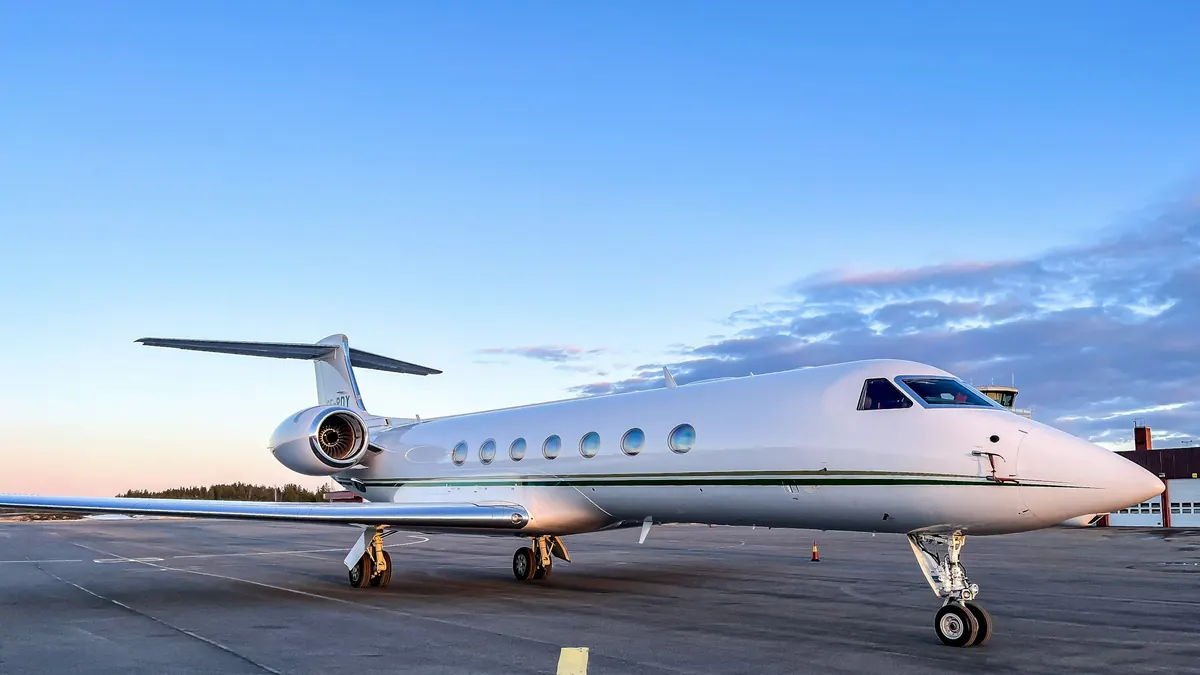
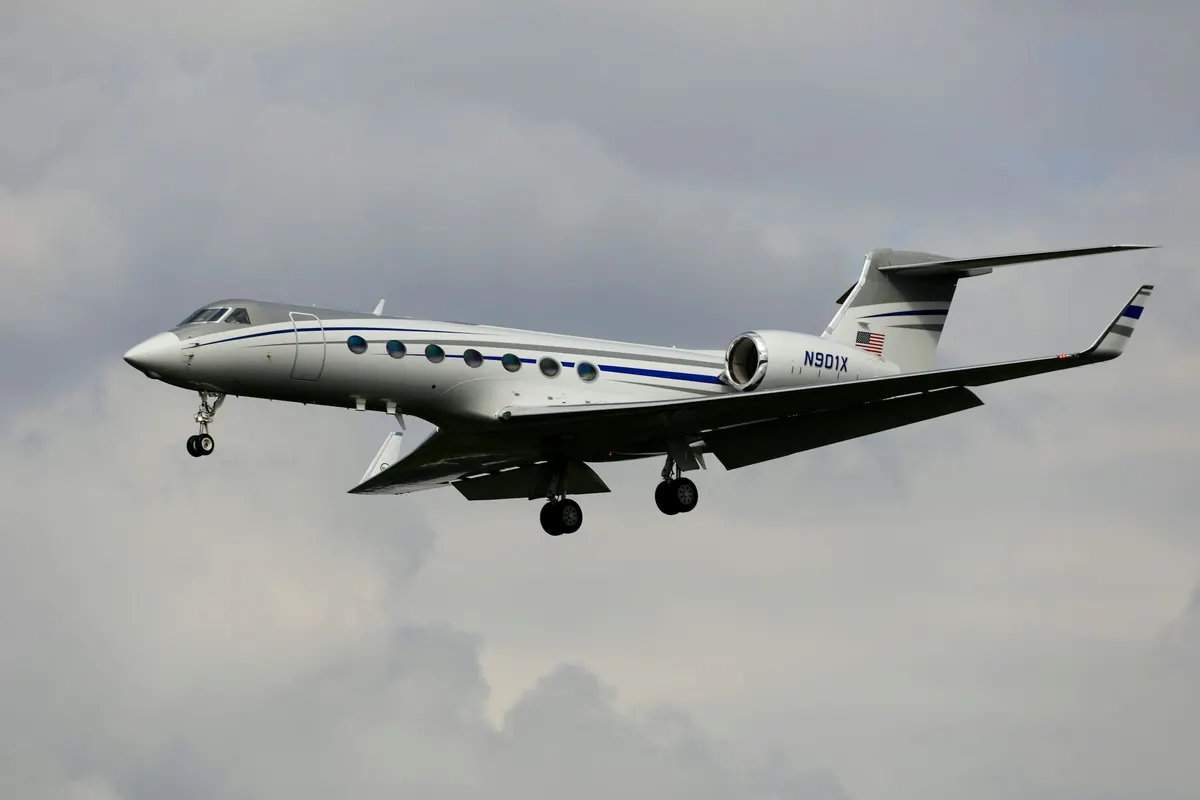
| Large cabin | 6.0–6.2 ft | Gulfstream G450, Challenger 650, Falcon 2000LXS | Stand, walk and use separate areas |
| Ultra long range | 6.2–6.4 ft | Gulfstream G650ER, Global 7500 | Several zones, often with a bedroom |
The jump that changes the experience most is from under five feet to just under six. In a light jet you settle into your seat and stay there; moving means a crouch. A midsize lets most people walk the aisle with a slight stoop. At six feet, in a super-midsize, most adults stand straight, and the cabin starts to feel like a room rather than a row of seats.
When headroom earns its cost
For a 40-minute hop from Teterboro to the Hamptons, cabin height hardly matters: everyone is seated for most of the flight anyway. The calculation changes with time in the air.
- Under about 90 minutes. A turboprop or light jet is the sensible choice. The hourly saving is real and nobody needs to move much.
- Two to four hours. This is where a midsize earns its place. Getting up to stretch, using an enclosed lavatory and reaching your bag without contortion all start to matter.
- Four hours and more. A stand-up cabin is worth having, and trips this long usually need super-midsize range anyway, so the two arrive together.
Who is flying matters as much as how far. Tall passengers, older travellers, anyone with a bad back and families with young children all feel a low cabin more. So does anyone planning to work: a laptop session is easier when you can get up and walk around between calls.
The lavatory question
Cabin height is closely tied to something brochures say less about: the lavatory. Larger cabins have an enclosed lavatory with a door and room to stand. On some smaller aircraft the toilet is a seat at the front or rear of the cabin, closed off by a curtain or a folding partition, and some turboprops and very light jets have only a basic facility. If it matters to anyone in your group, ask before you book. Your advisor can confirm the layout of the specific aircraft offered.
Paying for inches
Using typical US market ranges, the step from a light jet ($3,500–5,500 an hour) to a midsize ($4,500–7,000) costs roughly $1,000–1,500 more per flight hour and buys about ten inches of headroom, an enclosed lavatory and more bag space. Range barely changes, at around 2,100 nautical miles for both.
The next step, to a super-midsize ($6,500–9,500 an hour), adds about four more inches, a flat floor in many models and a large jump in range, from roughly 2,100 to 3,200–4,000 nautical miles. That is why the super-midsize is so often the answer for long domestic trips: you buy a nonstop and a stand-up cabin in one step.
These are estimates before tax and fees, and real quotes move with the aircraft’s location, the date and the operator. They are still a useful way to frame the decision. On a three-hour trip, the midsize premium is often $3,000–4,500 in total. Split across five passengers, that is a modest price for arriving without a stiff back.
A simple rule for choosing
- Seated for under two hours with a small group: a light jet or turboprop.
- Two to four hours, or anyone tall or less mobile on board: a midsize.
- Over four hours, coast to coast, or a group that wants to work and eat properly: a super-midsize or larger.
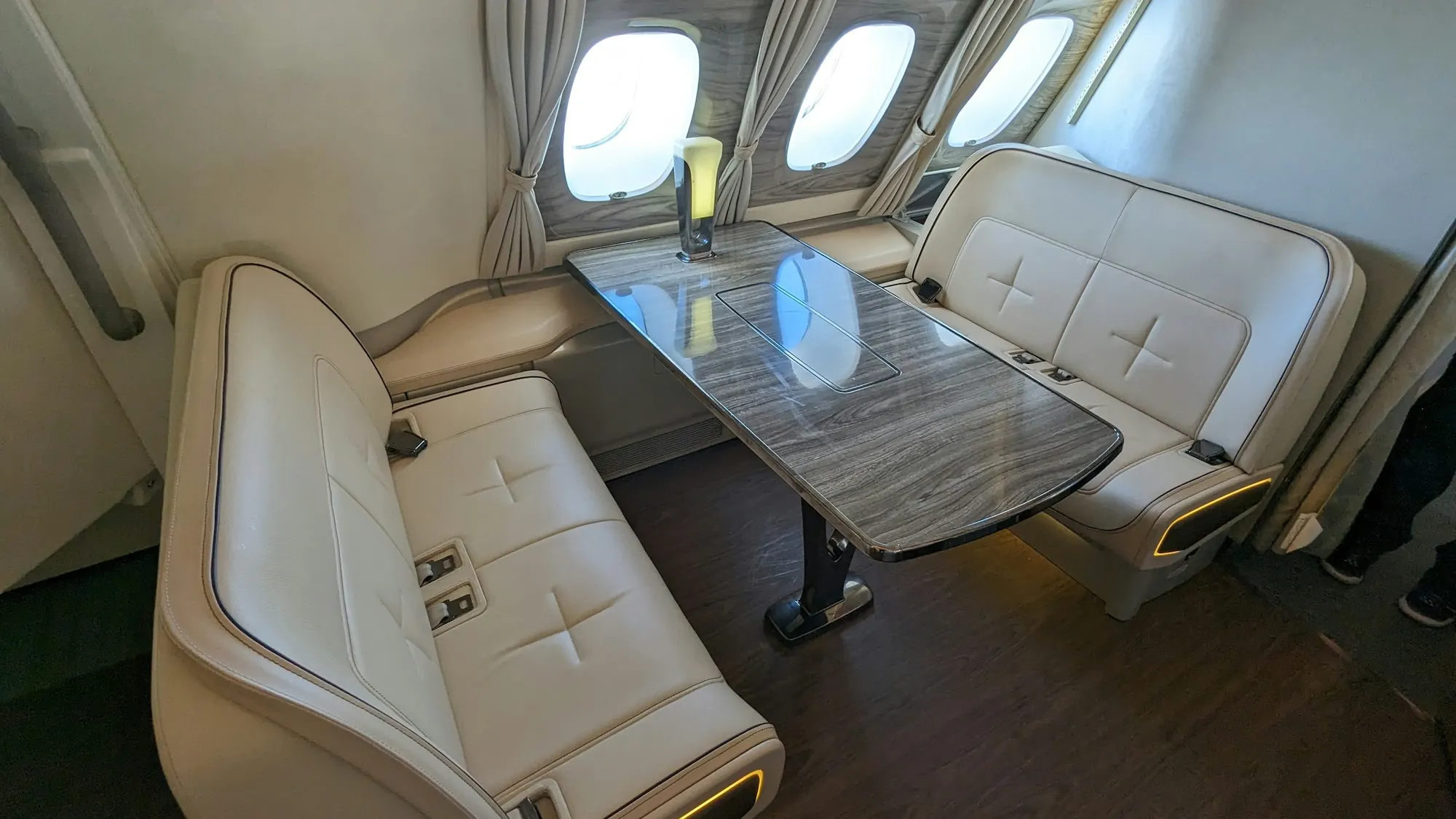
Then look at the specific aircraft. Two jets in the same class can feel quite different depending on the interior layout, the condition of the seats and whether the lavatory is enclosed. Your quote names the model and the operator, and you can ask to see cabin photos of the actual aircraft before you sign anything.
Comparing cabins on this site
Our comparison tool puts cabin height on the same scale as range, cruise speed and seats, so the trade-off is visible in one view. Pick a light jet and a super-midsize and the difference is obvious. When you request a quote, mention anything that depends on headroom, such as a tall passenger or someone who needs to move around in flight, and your options will reflect it.
Compare, then charter
Send your trip and get aircraft options with an all-in price from Part 135 operators.